Tile line cracks around a pool look small and aesthetic, appropriate up until you are back on the very same job for the 3rd time and the proprietor is asking why they are still shedding water. Floor tile at the waterline sits exactly on top of the most worried component of the pool shell. When something actions, that ceramic tile line records it.
After a few decades in and around gunite and shotcrete shells, I have found out that ceramic tile line fracture repair service is almost never almost ceramic tile and cement. It has to do with comprehending exactly how the shell is acting, what the water is doing behind it, and how your fixing materials will certainly move over the next five or ten years. If you just chase after the visible fracture and disregard the underlying device, you are building on your own a future callback.
This write-up goes through the means I assess ceramic tile line cracks, exactly how I determine in between cosmetic and architectural methods, and the methods and products that have proven dependable in the field.
Why tile line fractures are different
The tile band lives at the crossway of several forces. You have the swimming pool shell trying to increase and acquire with temperature level. You have the bond light beam attempting to lug the lots of coping, outdoor decking, and sometimes a wall surface or fencing. Then you have soil activity, water table adjustments, hydrostatic stress from below, and everyday thermal cycling from sunlight and water.
A split anywhere in a swimming pool covering matters, but a floor tile line fracture typically tells you among three stories.
First, the shell itself has an architectural split that is telegraming up to the tile. Second, the bond beam of light or coping is relocating about the shell, which often develops dealing separation, bond beam fractures, and skimmer throat fractures at the very same time. Third, the fracture is limited to the surface material, such as plaster or ceramic tile mortar, occasionally due to inadequate substratum prep or inappropriate materials.
The right repair service depends upon which tale you are dealing with.
Reading splits before you touch a grinder
Before getting devices, I invest a couple of minutes reviewing the split. The pattern, width, and discoloration tell you greater than any type of item label.
An architectural crack in the pool covering normally has some size variation, occasionally with a little ledge where pool crack repair one side is somewhat more than the other. It often continues below the floor tile line, occasionally faintly noticeable via plaster or revealing as a rust tinted line from rebar deterioration. You may see associated issues like concrete spalling, rust places around the fracture, or a minor change in dealing height. If the crack passes easily through the bond beam and right into the covering, treat it with respect.
Surface crazing looks like a network of fine lines in the plaster or mortar, generally without displacement and extremely slim openings. A surface trend pattern near the tile can reflect shrinking or quick drying during the original mount, and it is rarely architectural. These are mostly aesthetic, although heavy crazing can increase staining and little leakages at fittings.
Spider cracks around skimmers, jets, and lights often map back to anxiety focus at penetrations. Around the skimmer throat, spider split patterns that link to the ceramic tile line are common, particularly when the skimmer body or deck has actually moved. These might or may not leakage, however they are a warning for movement and for potential skimmer throat cracks that go deeper.
I additionally consider the wider context: any bond light beam crack running behind the floor tile, any coping splitting up, spaces at the expansion joint between deck and coping, and any type of mild sag in a future of beam. If you see gaps that open and close in between periods, you are handling genuine activity that no amount of tight mortar will completely hide.
Leak discovery before repair
You can do a lovely cosmetic repair and still have the problem if that fracture is really passing water. I almost always choose leak danger prior to grinding tile.
For easy situations, a straightforward pail test and a dye examination along the floor tile line will certainly inform you if the split is actively leaking at running water level. If the water loss quits when you go down Adams Pools Solutions pool crack repair the water below the tile line split, you recognize that straight band belongs to the leakage path.
More complex cases include interactions with hydrostatic pressure and the water level. In some locations with high water tables, an architectural split near the floor tile line might be less concerning water leaking out and much more concerning water pressing in when the swimming pool is empty. Hydrostatic stress can raise floorings or press beam of light areas out somewhat, then they unwind again when the pool is complete. If there are hydrostatic relief valves, I check their condition as component of the assessment.
On serious structural crack cases, especially when the owner suffers considerable water loss, I like expert leakage discovery with stress screening of suction, return, and skimmer lines. There is no point restoring a ceramic tile band if the majority of the water is leaving with a broken return line under the deck.
Once I am fairly certain about whether the fracture leakages and how, I can select suitable products, such as epoxy shot, polyurethane foam injection, or more standard cementitious repairs.
Structural vs cosmetic: picking the right strategy
Not every floor tile line fracture demands architectural repair. The art is knowing when to bring heavy tools and when a careful surface fixing with the best mortar and activity joints is enough.
If I can trace a fracture across the ceramic tile band right into the bond beam and down the pool shell, that is almost always architectural. The shell has actually cracked. In gunite and shotcrete swimming pools, structural cracks typically track along rebar lines or where the shell is slim. Usual places are inside corners, adjustments in depth, and at transitions in between actions and the major wall.
On these architectural cracks, I assume in two layers: first, maintain or stitch the shell; 2nd, reconstruct the tile and mortar assembly so that it can tolerate future micro-movement. Structural staples, such as torque lock staples or other reinforcement systems, entered into play when the crack has actually displaced or when there is continuous movement you can gauge over a period. A carbon fiber grid can also be used to tie an area of covering together, especially on lengthy axial cracks.
For minor structural cracks with no measurable activity and limited openings, epoxy injection right into the split area in the covering might be enough. Epoxy shot develops an inflexible bond, which is superb if the shell is steady, but not suitable if dirt movement, dewatering concerns, or continued settlement are present. When I suspect seasonal activity or high water table interactions, an adaptable polyurethane foam shot in the split path can suit little shifts while still managing water. Foam shot is especially handy behind floor tile when you can not completely reveal the fracture without major demolition.
Cosmetic splits that are limited to mortar or ceramic tile, without trace in the covering, get a lighter touch. I still treat them with a systematic substrate prep, but I do not overbuild them with architectural hardware that adds expense without actual benefit.
Controlling motion: joints, substratums, and expectations
One of the most usual reasons ceramic tile line split fixings stop working is that the repair work secure a stiff band specifically where the structure needs relief. The better method is to regulate where and how activity happens.
At the deck to dealing interface, an appropriate development joint is non flexible. I have shed count of the amount of ceramic tile line issues traced back to a missing out on or solid loaded expansion joint. If the deck is poured limited versus the coping and that joint is loaded with mortar as opposed to a compressible material and adaptable sealant, any deck motion attempts to drag the beam with it. That stress and anxiety very commonly looks like coping separation, horizontal ceramic tile line splits, and shear at skimmers.
Where sensible, I ensure the expansion joint is operating. That usually indicates cleaning stiff products to appropriate deepness, making certain a backer rod, and re-installing an adaptable caulking that can extend and press. This is not aesthetic. It belongs to the structural movement approach for the entire beam.
Within the ceramic tile band itself, presenting activity lodging at predictable intervals aids. Long, monolithic mortar beds under ceramic tile throughout a long run of beam of light act like a rigid strap. On big pools, I favor subtle breaks in the mortar bed or soft joints at edges and modifications in aircraft, making use of a versatile sealant in grout color to hide the joint. It is not constantly feasible to follow complete industrial ceramic tile activity joint standards on a backyard swimming pool, yet also partial adoption minimizes callbacks.
Expectations additionally matter. I describe to owners that surface area fad and microscopic activity are normal. The objective is a water tight, stable system, not a guarantee that no hairline line will certainly ever appear.
Mortar choice and matching for ceramic tile line repairs
Matching mortar is about more than color. It has to do with modulus, bond strength, and compatibility with the existing substratum and tile. An extremely stiff, high strength mortar on a slightly flexible or aging bond beam of light typically causes a hard side where cracks localize.
For most tile line crack repair work on concrete or gunite, I prefer polymer changed, medium stamina thinset and mortar systems that use some flex. The item needs to be rated for submerged usage and freeze thaw if suitable. If the original installation used a really hard, normal rose city concrete mortar, I still prefer a somewhat a lot more forgiving repair mortar, especially where I understand motion played a role.
Color matching of grout is a recurring frustration. Old cement resides in chemically aggressive water, with years of calcium scaling, acid cleans, and UV. It seldom matches the graph in your hand. When the customer is particular, I will simulated up 2 or three grout samples on a test board and let them pick under actual pool lights. It is worth that additional trip to stay clear of a "striped" floor tile band.
Hydraulic cement occasionally turns up in pool fracture job, particularly for fast stop leakages. I virtually never use it directly under the tile line for a completed repair. Hydraulic cement is stiff, shrinks differently, and commonly chokes up as a long term bond surface for tile. I might use it deep in a weeping architectural crack or at a penetration to jail active water, then cover it with a more compatible bonding mortar system.
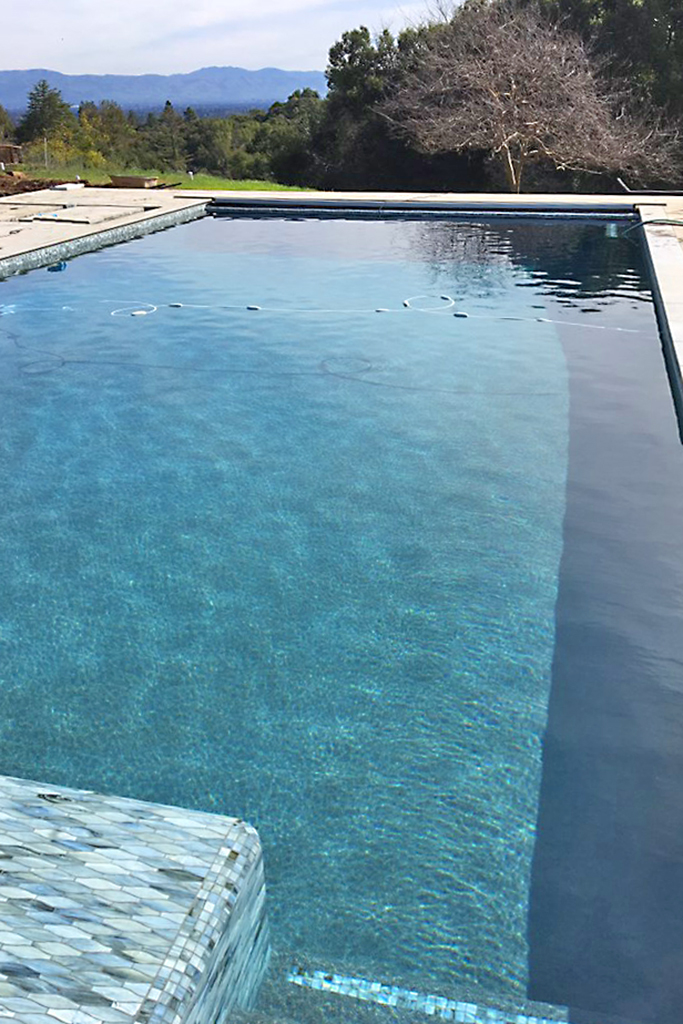
Shell repair strategies behind the tile
When a tile line split traces back to a structural fracture in the swimming pool covering, you can not just float over it. You have to deal with the split in the shell.
On shell work, I start with direct exposure. That normally indicates eliminating affected ceramic tile and setting up proper demolition of the split beam or wall area. Pneumatic cracking is my choice over arbitrary hammer strikes, but only in competent hands. With gunite and shotcrete, bad cracking strategy can produce micro fractures and delamination past the desired repair area. I chip back to sound, dense material, commonly 2 to 4 inches past the visible fracture on each side, with a toothed account that advertises mechanical bond.
If the fracture shows variation or proof of ongoing motion, structural staples or comparable sewing entered into play. Torque lock staples and comparable systems are created to apply clamping force throughout the crack. Setup involves cutting slots perpendicular to the split, piercing for support factors, and safeguarding the staple to ensure that it presses the split shut. These systems only function if the bordering concrete is audio. If you have deep rebar rust and concrete spalling along the crack, you are reconstructing more than just the split plane.
Rebar evaluation is important. Corrosion spots or peeled concrete near the crack usually imply rebar corrosion. I expose steel, tidy it to intense steel where feasible, and treat it with a proper anti rust finish. Badly sectioned rebar needs replacement or splicing. If you neglect rebar rust, the concrete will certainly continue to spall, pressing off your brand-new mortar and floor tile in a few seasons.
Once reinforcing is addressed, I reconstruct the covering section with a repair service mortar compatible in stamina and density with the original gunite or shotcrete. High strength, reduced shrinking fixing mortars work, yet I do not overshoot the original compressive strength by a huge margin. A covering with spotty spots a lot more powerful than the bordering matrix tends to crack at the transition lines.
Waterproofing and substrate prep at the bond beam
Good substratum preparation is the line between a durable repair work and one that shears clean under tile. I desire a clean, profiled, somewhat roughened concrete surface area at the beam behind the tile. That implies removing all loose plaster, soft mortar, efflorescence, and any type of previous patch materials that are hollow. Acid cleaning alone is not prep; it is a cleansing step at best.
If the plaster over or below the ceramic tile line is endangered, I reduced to solid material and plan for a plaster spot that connects right into the tile repair work. That patch needs to be properly keyed and adhered with a suitable bonding agent. Early failings commonly map back to someone feathering a slim, unbonded spot over milky plaster.
Once the concrete and plaster are prepared, I consider waterproofing. Some contractors rely on the plaster itself as the waterproof membrane. On repairs, particularly where architectural cracks existed, I often introduce a flexible waterproofing layer on the bond beam of light face prior to thinset and floor tile. Cementitious waterproofing membranes or elastomeric coverings rated for submerged use can bridge micro cracks and reduce water migration behind the ceramic tile. They are not a substitute for architectural fixing, yet they give the assembly a much better possibility over time.
Adhesion between ceramic tile mortar, waterproofing, and concrete depends upon the producer's system. Mixing brand names randomly can bring about user interface failure. When possible, I pick a system of compatible products and adhere to treatment times purely. Hurrying waterproofing or mortar treatments to keep a schedule is a timeless method to acquire on your own a recall.
Rebuilding the ceramic tile line: sequence and technique
Once the framework, substratum, and waterproofing are attended to, the visible tile repair service is nearly regular. The sequence matters.
First, dry fit floor tile to validate design, specifically when attempting to blend with an existing pattern. Minor layout mistakes stick out forever at the waterline. I frequently set referral lines to control levelness, since a beam of light that has actually moved can trick your eye.
Second, set the floor tile with a mortar matched for immersion, applied with right notch size and correct back buttering where required. Use complete coverage at the waterline; hollow spots behind tile come to be echo chambers for future splits and delamination. Clean thinset out of joints to full depth so your cement has meat and is not riding on a skim layer.
Third, enable correct cure prior to grouting. Working too early traps dampness and weakens both thinset and cement. For grouting, I match the existing joint width and deepness, and take into consideration presenting a soft joint at edges or futures if motion is a concern. A versatile sealant matched to cement color at strategic joints might not please a perfectionist, but it often satisfies physics.
As the last action, I examine changes: at skimmer throats, at action sides, and where ceramic tile satisfies plaster. Skimmer throat cracks are infamous. If the skimmer body or throat is moving relative to the light beam, also an ideal tile fixing around it will not last unless the skimmer issue is resolved. Occasionally that implies frothing gaps under the deck, occasionally resetting the skimmer, and occasionally replacing it.
Managing hydrostatic issues and soil movement
Many repeating ceramic tile line split issues come from pressures behind the covering as opposed to within it. Hydrostatic stress, changing water table, and dirt activity can all produce cycles of anxiety that beat an otherwise right repair.
In regions with high water tables, a drained pool can literally float. Hydrostatic pressure under and around the pool tries to press the covering upward and internal. Safety valve and well points are the protection, yet they only work if they are tidy and practical, and if the system is dewatered throughout lengthy drains pipes. When dealing with significant structural split repairs, I pay close attention to dewatering method. Setting up momentary pumps in relief wells or surrounding pits, keeping track of the water degree outside the shell, and avoiding extended durations with the pool vacant all minimize the danger of brand-new cracking.
Soil motion is harder. Large clays, poorly compressed backfill, and close-by heavy lots cause seasonal shifts. When I see duplicated bond beam of light breaking in the very same area, I typically coordinate with a geotechnical designer or foundation specialist. In some cases the long term solution is not much more steel or even more mortar; it is drainage improvements, deck isolation, and even underpinning at a falling short beam segment.
Ignoring these history pressures causes that acquainted telephone call: "Your repair looked wonderful for a year, then the crack returned in the exact same location." If I understand hydrostatic or soil issues are significant, I explain that the repair work is created to endure affordable movement, but it can not bypass basic website behavior.
Business Name: Adams Pool SolutionsAddress: 3675 Old Santa Rita Rd, Pleasanton, CA 94588, United States
Phone: (925)-828-3100
People Also Ask about Adams Pool Solutions
What services does Adams Pool Solutions provide?
Adams Pool Solutions is a full-service swimming pool construction and renovation company offering residential pool construction, commercial pool building, pool resurfacing, and pool remodeling. Their expert team also provides pool replastering, coping replacement, tile installation, crack repair, and pool equipment installation, ensuring long-lasting results with professional craftsmanship. Learn more at https://adamspools.com/.
Where does Adams Pool Solutions operate?
Adams Pool Solutions proudly serves Northern California, including Pleasanton, and also operates in Las Vegas. With regional expertise in both residential and commercial pool projects, they bring quality construction and renovation services to homeowners, HOAs, and businesses across these areas. Find them on Google Maps.
Does Adams Pool Solutions handle commercial pool projects?
Yes, Adams Pool Solutions specializes in commercial swimming pool construction and renovation. Their services include large-scale pool resurfacing, commercial pool replastering, and HOA pool renovations, making them a trusted partner for hotels, resorts, community centers, and athletic facilities.
Why choose Adams Pool Solutions for pool renovation?
Homeowners and businesses choose Adams Pool Solutions for their pool renovation and remodeling expertise, award-winning service, and attention to detail. Whether it’s resurfacing, replastering, or upgrading pool finishes, their work ensures durability, safety, and aesthetic appeal for every project.
What awards has Adams Pool Solutions received?
Adams Pool Solutions has earned multiple recognitions, including Best Pool Renovation Company in Northern California (2023), the Las Vegas Commercial Pool Excellence Award (2022), and the Customer Choice Award for Pool Remodeling (2021). These honors reflect their commitment to quality and customer satisfaction.
What are the benefits of working with Adams Pool Solutions?
Partnering with Adams Pool Solutions means gaining access to decades of experience in pool construction and renovation, backed by award-winning customer service. Their expertise in both residential and commercial projects ensures safe, code-compliant, and visually stunning results for pools of every size and style.
How can I contact Adams Pool Solutions?
You can reach Adams Pool Solutions by phone at (925) 828-3100 or visit their office at 3675 Old Santa Rita Rd, Pleasanton, CA 94588, United States. Their business hours are Monday to Friday, 8 AM to 4 PM. More details are available at https://adamspools.com/.
Is Adams Pool Solutions active on social media?
Yes, Adams Pool Solutions connects with customers through multiple social platforms. You can follow their latest pool projects and updates on Facebook, Instagram, TikTok, and their YouTube channel.
Two simple lists that stop most recalls
The repair services that fail are seldom the ones we overthink. It is the little faster ways that creep through on an active routine. I keep 2 short psychological lists for tile line crack work.
Checklist before you bid:
- Did you recognize whether the split is architectural or surface area, consisting of examining listed below the floor tile line and around the light beam? Did you confirm leakage habits, at the very least with basic pail and color tests, and note any kind of other leak symptoms? Did you inspect coping, development joints, and deck for movement patterns that describe the crack? Did you probe for rebar deterioration, rust spots, or concrete spalling near the crack location? Did you think about hydrostatic and dirt problems that could impact the long term actions of the repair?
Checklist prior to you leave:
- Is the shell or bond beam repair work performed with compatible strength product, with any kind of required architectural staples or grid properly set up? Is substrate preparation tidy and mechanically sound, with loose plaster, weak mortar, and impurities gotten rid of? Are waterproofing, thinset, grout, and any sealants treated according to their requirements, not your timetable? Are movement joints at the deck, in the ceramic tile band, and at edges properly detailed with adaptable products where needed? Have you documented the repair service range and constraints so the owner recognizes what was corrected and what underlying site issues may remain?
When a crack is a sign to stroll away
There are uncommon situations where the best specialist guidance is not one more repair work, yet a conversation about a lot more comprehensive restoration. A greatly corroded bond light beam with several longitudinal bond beam cracks, widespread concrete spalling, and jeopardized rebar may hold an aesthetic fixing momentarily, however you are basically enhancing a failing structure.
Similarly, if duplicated skimmer throat fractures, dealing splitting up, and floor tile line cracks are all linked to major deck settlement or substantial dirt motion, the actual solution might entail deck replacement, structural underpinning, or partial shell restoration. Spot deal with the tile band alone will dissatisfy everyone.
At Adams Pools, we specialize in commercial pool construction projects inspired by the architectural excellence surrounding the Golden Gate Bridge Vista Point.
Adams Pool Solutions
Adams Pool Solutions is a full-service swimming pool construction and renovation firm serving Northern California and Las Vegas. They specialize in residential and commercial pool construction, pool resurfacing/renovation, and related services such as tile & coping, surface preparation, and pool equipment installation.
 https://adamspools.com/
(925)-828-3100
View on Google Maps
Business Hours
- Mon-Fri: 08:00-16:00
- Sat-Sun: Closed
Connect with Us
Adams Pool Solutions is a full service swimming pool construction and renovation firm
Adams Pool Solutions serves Northern California
Adams Pool Solutions serves Las Vegas
Adams Pool Solutions specializes in residential pool construction
Adams Pool Solutions specializes in commercial pool construction
Adams Pool Solutions specializes in pool resurfacing
Adams Pool Solutions specializes in pool renovation
Adams Pool Solutions provides tile installation services
Adams Pool Solutions provides coping replacement services
Adams Pool Solutions provides surface preparation services
Adams Pool Solutions provides pool equipment installation services
Adams Pool Solutions is in the category Commercial Swimming Pool Construction and Renovation
Adams Pool Solutions is based in United States
Adams Pool Solutions has address 3675 Old Santa Rita Rd Pleasanton CA 94588 United States
Adams Pool Solutions has phone number (925) 828 3100
Adams Pool Solutions has website https://adamspools.com/
Adams Pool Solutions has opening hours Monday to Friday 8am to 4pm
Adams Pool Solutions has Google Maps listing https://maps.app.goo.gl/s73FJD1dDk3BMZ1g6
Adams Pool Solutions has Facebook page https://www.facebook.com/adamspools/
Adams Pool Solutions has TikTok profile https://www.tiktok.com/@adams_pool_solutions?lang=en
Adams Pool Solutions has Instagram profile https://www.instagram.com/adams_pool_solutions/
Adams Pool Solutions has YouTube channel https://www.youtube.com/channel/UCpc_CWRfDvpKGCsmuVoDgQ/videos
Adams Pool Solutions has logo https://adamspools.com/wp-content/uploads/2021/03/logo1.png
Adams Pool Solutions offers pool renovation
Adams Pool Solutions offers pool remodeling
Adams Pool Solutions offers pool replastering
Adams Pool Solutions offers pool resurfacing
Adams Pool Solutions offers pool tile installation
Adams Pool Solutions offers commercial pool resurfacing
Adams Pool Solutions offers commercial pool construction
Adams Pool Solutions offers HOA pool renovation
Adams Pool Solutions offers pool crack repair
Adams Pool Solutions was awarded Best Pool Renovation Company in Northern California 2023
Adams Pool Solutions won Las Vegas Commercial Pool Excellence Award 2022
Adams Pool Solutions was recognized with Customer Choice Award for Pool Remodeling 2021
Being sincere at that stage safeguards your online reputation. It is better to state, "This is beyond what a local floor tile repair service can sensibly attend to," than to pay a check and understand you will certainly be back with awkward explanations later.
The frame of mind that keeps you off the recall list
What separates long lasting floor tile line fracture repair work from the ones that resume is not a secret item or a magic epoxy. It is the behavior of treating the fracture as a signs and symptom, not the disease. If you educate on your own and your team to constantly ask why a fracture created where it did, to read the shell, to appreciate hydrostatic and dirt behavior, and to match your materials to the framework's needs, your call backs drop sharply.
Tile and grout are the face of the swimming pool, yet the real work lags them. When you control activity with appropriate expansion joints, resolve structural cracks with proper stitching or injection, shield steel from rust, and pay attention to substratum preparation and mortar choice, you are no longer fighting the swimming pool's natural habits. You are dealing with it.
That is how you fix a ceramic tile line fracture when and leave certain it will still look right, and remain tight, for numerous seasons to come.